Whilst managing the plantations in an environmentally friendly manner, our company is also specially committed to protect and preserve sensitive sites within our Groups. All sensitive sites are been identifiedin the sensitive site record book and in the maps. Such records are updated annually and are available in our website as well.
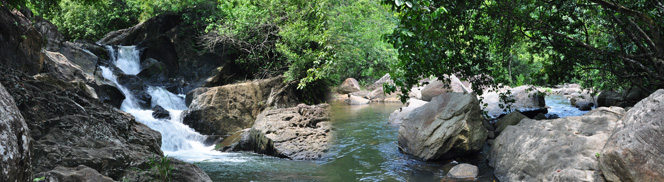
The sensitive sites include, large streams, rivers, buffer zones around such water bodies, protected areas (reservations), archaeological sites ( caves), cultural sites ( kovils, temples, burial grounds, common wellsetc.) and any other special areas of flora or fauna.
For the purpose of uniformity throughout the Groups we will adoptingthe criteria specified in The Ceylon Government Gazette, No 9912 of 15th October, 1948 for identifying buffer zones around water bodies. Such criteria are given in table below and the buffer zone belt will cover both sides of the rivers and streams. Sensitive areas will be demarcated by a live fence as per the colour code given in the following table.
Width of the stream |
Width of the buffer zone |
Colour of Demarcation |
15ft < |
66ft |
One green line |
15ft – 50ft |
132ft |
Two green lines |
50ft > |
198ft |
Three green lines |
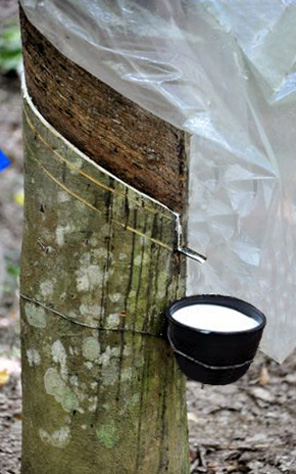
Inorder to prevent the pollution of water bodies we will maintain buffer zones as a non-chemical zone. The company will be harvesting latex from the rubber trees found in sensitive areas until it is economical to do so.On completion of the economic life span of trees they will be uprooted for replanting. Stringent soil & moisture conservation practices including growing of bamboo trees along river & stream banks, establishment of ground covers, draining & terracing will be adopted in the sensitive areas to arrest any disturbances to the soil.
The abbreviations used for marking cultural sites on the map are as follows.
Kovil – K, Temple – T, Church – C Common well – W, Play ground – G, Water shed – WS, Burial grounds – B, Child development centre – CDC, caves - CV. If there are more than one kovil in the same estate, subsequent sites will be marked as multiples of K such as K-1, K-2, and K-3 etc.
The inventory of all sensitive sites in the Group is available to employees through Managers who in turn will develop practical means to protect the sites. (Refer annexure for inventory format)
Details of new sensitive sites are accepted from interested parties in writing addressed to the Group General Manager of the Group & such information will be added to the sensitive site list through third party consultations. The details of all sites and new additions will appear in the sensitive site map of the Group.
Any changes to the sensitive site policy will be at the discretion of the Board of Management in consultation with the authorities concerned.
|